Piano Repair vs. Piano Restoration: Which One Does Your Piano Need
KEY TAKEAWAYS
- Piano repair fixes a specific, identifiable problem – a broken string, a sticking key, a cracked hammer – while the rest of the instrument stays as it is.
- Piano restoration rebuilds major systems of an aging piano, often replacing strings, pins, hammers, or the soundboard, and applies to instruments 40 or more years old that have declined across the board.
- The decision comes down to three things: the piano's age, its overall condition, and what you actually want from it going forward.
- A technician who inspects the instrument in person can tell you which path fits, and often a targeted repair is all a piano needs.
- Piano repair and piano restoration solve two different problems. Repair addresses a single fault while the rest of the piano keeps working. Restoration rebuilds worn-out systems across an older instrument that has declined over decades. Confusing the two is how owners end up either underpaying for a patch that won't hold or overpaying for a rebuild the piano never needed. If you are weighing professional piano repair against a full restoration, the right answer depends on what is actually wrong and how you plan to use the piano.
Ron Moore has spent over 14 years working on pianos across Northeast Indiana and Northwest Ohio, from the concert grands at the Fort Wayne Philharmonic to uprights in living rooms across Fort Wayne. That range matters here, because the same diagnostic questions apply whether the piano seats a soloist or a beginner. This article walks through what each service covers, how to decide between them, what drives cost and time, and the questions worth asking before you commit.
What Piano Repair Covers
Piano repair fixes a specific problem while leaving the rest of the instrument intact. Something broke, wore out, or stopped working, and the goal is to get that one part functioning again. This is the more common of the two services because most pianos develop isolated faults long before they need anything larger.
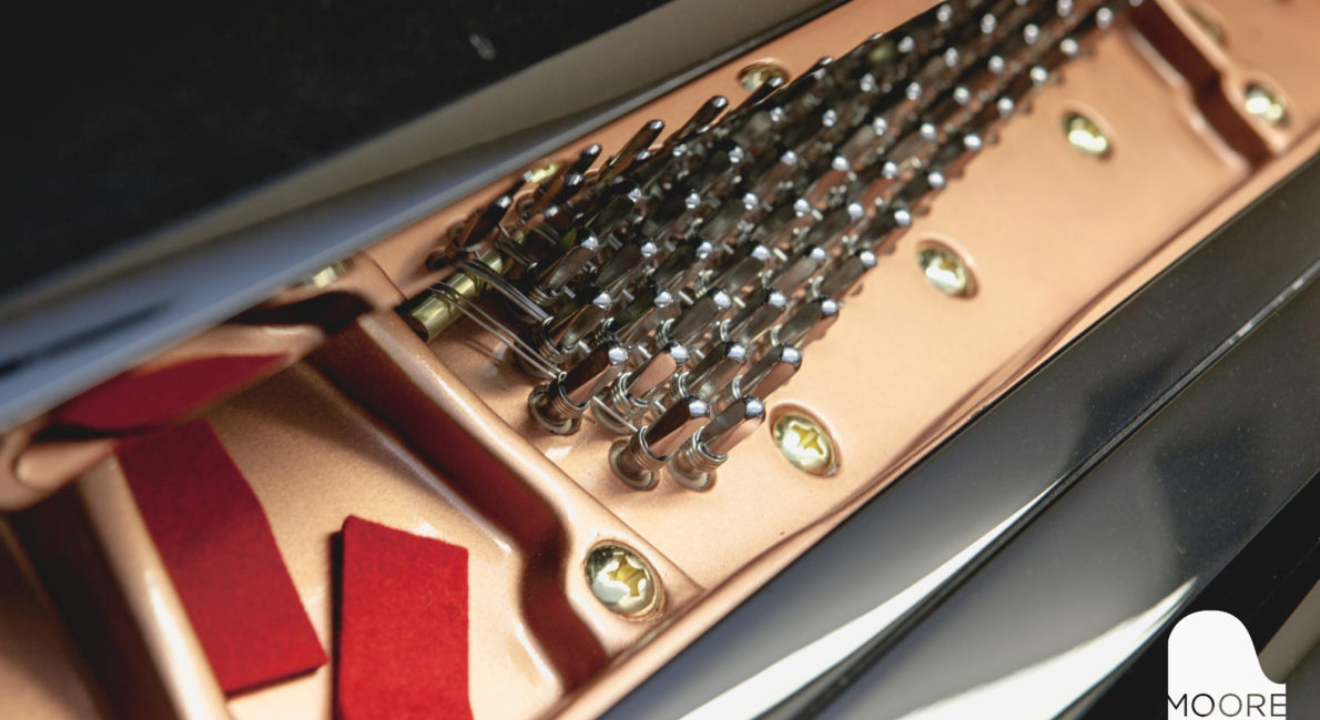
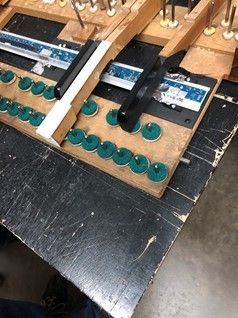
Typical repairs include replacing a broken string, freeing a key that sticks or won't return, regluing loose action parts, fixing a pedal that has gone dead, addressing buzzing or rattling from inside the case, and replacing worn hammer felt on individual notes. A note that plays twice, a key that stays down, a dampener that won't silence the string – these are repair jobs, not restoration jobs.
The defining feature of a repair is scope. The technician isolates the fault, confirms the surrounding parts are sound, and corrects the one thing that failed. A piano that plays well except for three dead keys in the upper register does not need to be rebuilt. It needs those three notes diagnosed and fixed.
Repairs also cover problems that show up after a move or a season of humidity swings, which are common in Indiana and Ohio. Wood expands and contracts, glue joints loosen, and felt compresses. Most of these are contained issues a technician can correct in a single visit.

What Piano Restoration Covers
Piano restoration rebuilds major systems of an older instrument that has worn out across the board. This is not one fix – it is a coordinated overhaul of the parts that wear with age and use. Restoration applies to pianos that are typically 40 years old or more, where the decline is not limited to a single component.
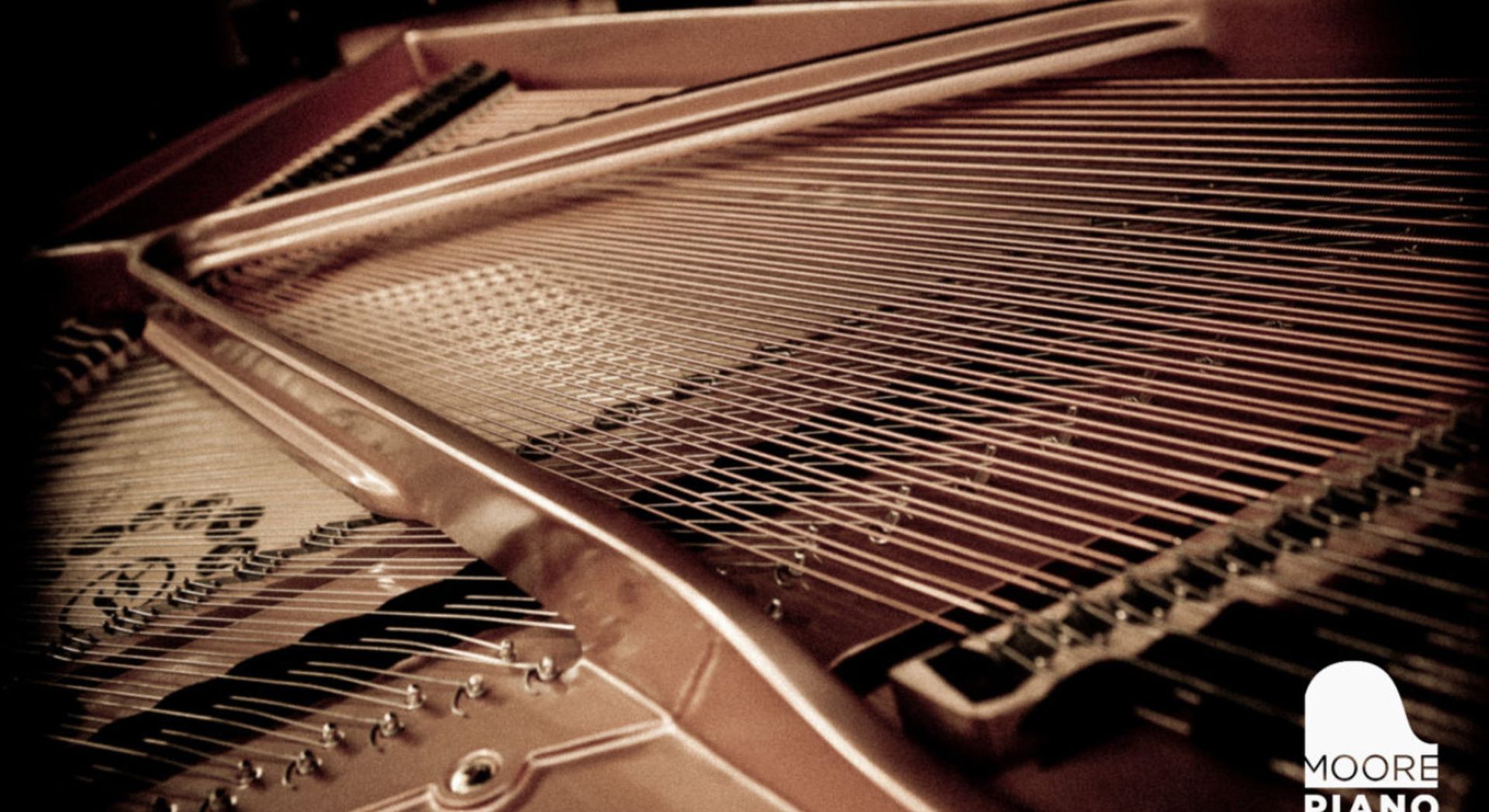
Restoration work can include replacing the entire set of strings and tuning pins, installing new hammers and action parts, repairing or replacing the soundboard, rebuilding the pinblock that holds tuning pins under tension, and refinishing the case. In a full rebuild, the piano comes apart in stages and goes back together with new components in the systems that have failed.
The reason restoration exists is that some faults are not isolated. When tuning pins across the whole piano have loosened, when the soundboard has cracked and lost its crown, when hammers are grooved down to the wood on every note, patching one section does nothing. The instrument has reached the end of its original working life, and the choice is to rebuild the worn systems or replace the piano.
Restoration makes the most sense for pianos with real value – a well-built older grand, a family instrument worth keeping, or a piano whose case and scale design are worth preserving. It is a larger commitment than a repair, and it should be approached as one.
Small piano repairs can often resolve everyday problems before they become larger, more expensive issues. A sticking piano key, broken string, loose action part, noisy pedal, buzzing sound, or individual note that isn't playing correctly may only require a targeted repair rather than a full piano restoration. If your piano has a small but frustrating problem, a technician can identify the cause and determine whether a simple piano repair is enough to restore proper function. Moore Piano specializes in small piano repairs and can help diagnose and fix common piano problems without recommending unnecessary work. Learn more about small piano problems and repair to see which issues may be fixable without a major overhaul.
How to Decide Between Repair and Restoration
Start with three questions: how old is the piano, what is its overall condition, and what do you want to do with it. Those three answers point to the right service more reliably than any single symptom.
Age sets the baseline. A piano under 25 years old with a specific complaint almost always needs a repair. The systems have not aged out yet, so an isolated fault is just that – isolated. A piano past 40 that has been played hard or stored poorly is a candidate for restoration, though not automatically.
Condition is where an in-person inspection earns its keep. A technician checks whether the problems are contained or spread across the instrument. One buzzing string is a repair. Tuning pins slipping across three octaves signals a worn pinblock, which is restoration territory. The number and pattern of faults tell you which category you are in.
Your goal matters as much as the piano's condition. A beginner's practice piano that needs to play reliably is a different situation than a performance instrument that has to hold pitch and tone under demanding use. Moore Piano maintains the pianos at the Embassy Theatre, The Clyde Theatre, and Honeywell Arts & Entertainment, where the standard is stage-ready. The same technician also keeps home pianos playable for Fort Wayne Community Schools and East Allen County Schools students. What you need the piano to do shapes how much work is worth doing. You can read more about Ron Moore's background and the clients he works with to see how that range informs the recommendation.
What Drives Cost and Time
Cost and time scale directly with scope, which is the clearest reason to get the diagnosis right before the work starts. A repair is bounded – one part, one fix, often one visit. A restoration is a project with multiple stages and materials, and it takes longer and costs more because it is replacing systems, not correcting a fault.
For repairs, the main variables are how many parts are involved, whether the parts are stock or need to be sourced, and how much of the action must come apart to reach the problem. A sticking key near the surface is quick. A broken part deep in the action of a grand takes more time to reach and correct.
For restoration, the drivers are the systems being rebuilt. New strings and pins, a new pinblock, a soundboard repair, and a full set of hammers each add material and labor. A refinish adds more. The piano is often out of service for an extended period while the work is staged. This is why scoping the job correctly upfront matters – you do not want to start down a restoration path for a problem a repair would have solved, and you do not want to keep repairing a piano that has genuinely worn out.
Scheduling for standard service through Moore Piano typically runs one to seven days out, which helps when you need a repair handled before a recital, a lesson schedule, or a performance. You can find Moore Piano's location and reviews on Google Maps to get a sense of the work across the region.

Questions to Ask a Piano Technician
Before you agree to any work, ask the technician to name the specific problem and tell you whether it is isolated or part of a larger pattern. A clear answer separates a repair from a restoration. If the technician can't point to the exact fault, the diagnosis isn't finished.
Ask whether the surrounding parts are sound. A good repair recommendation includes confirmation that the rest of the piano is working, so you are not fixing one note today and another next month on an instrument that is quietly failing everywhere.
For an older piano, ask directly whether restoration is worth it given the instrument's value and your goals. A straight answer sometimes means being told a repair is enough, or that a particular piano is not worth rebuilding. Ron Moore holds credentials from the Piano Technicians Guild and the Master Piano Technicians of America – memberships that require demonstrated technical skill on real instruments, not just a signup form. Moore Piano also carries BBB A+ accreditation and backs its work with a Risk-Free Guarantee. Ask what that guarantee covers for the specific job you are considering, so you know exactly what stands behind the work.
Finally, ask for the scope in plain terms: what will be done, roughly how long it will take, and what the piano will do afterward that it doesn't do now. That conversation is where a repair-versus-restoration decision gets made honestly.
Get the Right Diagnosis Before You Spend
Fixing the wrong problem is the most expensive mistake a piano owner makes – either paying for a rebuild the instrument never needed or repeatedly patching a piano that has worn out. An accurate diagnosis puts your money where it belongs, and for most pianos with a single complaint, that means a straightforward repair rather than a full restoration.
Ron Moore works on the full range, from the concert grands at the Fort Wayne Philharmonic to the upright in your living room, which means the same technician who sets the standard for performance pianos across Northeast Indiana and Northwest Ohio can tell you exactly what your piano needs. Schedule an inspection with Moore Piano and get a clear answer on whether your piano needs a repair or a restoration before any work begins.
Frequently Asked Questions
How do I know if my piano needs a repair or a full restoration?
It comes down to three things: the piano's age, its overall condition, and what you want the piano to do. A piano with a single complaint - a broken string, a sticking key, a dead pedal - almost always needs a targeted repair while the rest of the instrument stays as it is. Restoration applies to older pianos, usually 40 years or more, where the wear has spread across major systems like the strings, tuning pins, pinblock, hammers, or soundboard. The most reliable way to tell them apart is an in-person inspection. Ron Moore checks whether the problems are isolated or part of a larger pattern, then tells you which path fits. For most pianos, a repair is all that's needed.
Will restoring an old piano cost more than the piano is worth?
Sometimes, and that's exactly why the diagnosis matters before any work begins. If rebuilding an older upright would cost more than a comparable working used piano, restoration rarely makes financial sense unless the instrument carries value a replacement can't match - a specific maker, a superior scale design, or family history. For most standard uprights with isolated problems, a targeted repair is the practical choice. Moore Piano will give you a straight answer, which sometimes means being told a repair is enough or that a particular piano isn't worth rebuilding. That honesty is the point of getting an evaluation first.
How soon can you get out to look at my piano?
Standard service scheduling through Moore Piano typically runs one to seven days out. That timing helps when you need a repair handled before a recital, a lesson schedule, or a performance. A repair is usually bounded to one visit, while a restoration is a staged project that takes longer because it replaces worn systems rather than correcting a single fault. Ron Moore serves Northeast Indiana and Northwest Ohio, including Fort Wayne and the surrounding area.
What does the Risk-Free Guarantee actually cover?
Moore Piano backs its work with a Risk-Free Guarantee, and the best step is to ask what it covers for the specific job you're considering, since a repair and a restoration are different in scope. Beyond the guarantee, Ron Moore holds credentials from the Piano Technicians Guild and the Master Piano Technicians of America - memberships that require demonstrated technical skill on real instruments, not just a signup - and the business carries BBB A+ accreditation. The same technician who maintains the pianos for the Fort Wayne Philharmonic, the Embassy Theatre, and The Clyde Theatre handles home pianos across the region, so the standard is the same whether the piano is on a stage or in your living room.
The Unmatched Piano Blog