5 Small Piano Problems That Become Expensive Repairs If Ignored
KEY TAKEAWAYS
- A single sticking key, a faint buzz, or a note that won't sound is rarely just cosmetic – it usually points to a mechanical or structural issue inside the piano that grows worse with time.
- Skipping tuning for years lets string tension drop unevenly, which stresses the pinblock and soundboard and can turn a routine tuning into a pitch-raise or repair job.
- Humidity swings across Northeast Indiana and Northwest Ohio cause wood to swell and contract, and that movement is behind many stuck keys, cracked soundboards, and loose tuning pins.
- Catching these five problems early costs far less than the repairs that follow if you let them run – a technician can diagnose most of them in a single visit.
Small piano problems are the early mechanical or structural warning signs – a dead key, a buzz, a note that fades – that a technician can trace to a specific internal cause before it forces a larger repair. Most of the time, the fix is simple if you catch it early. The trouble starts when a minor symptom gets ignored for a year or three and the underlying cause spreads to parts that are harder and more expensive to reach. If you want the full picture of how these issues connect, our guide to common piano problems and when to repair them lays out the pattern.
Ron Moore has spent over 14 years diagnosing exactly these symptoms on instruments ranging from home uprights to the concert grands he maintains for the Fort Wayne Philharmonic. The same problems show up on both. Here are the five that most often start small and end up costing real money.
1. A Dead Key That Won't Play
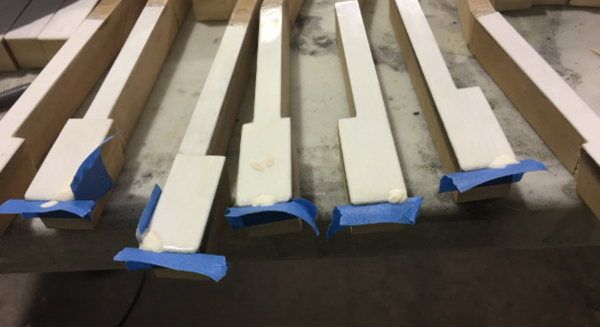
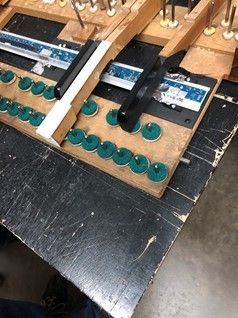
A key that presses down but produces no sound is the most common call a piano technician gets, and it almost never fixes itself. The cause is usually inside the action: a broken hammer shank, a slipped flange, a failed spring, or a bit of felt that has worn or come loose. On older pianos, glue joints dry out and let parts separate.
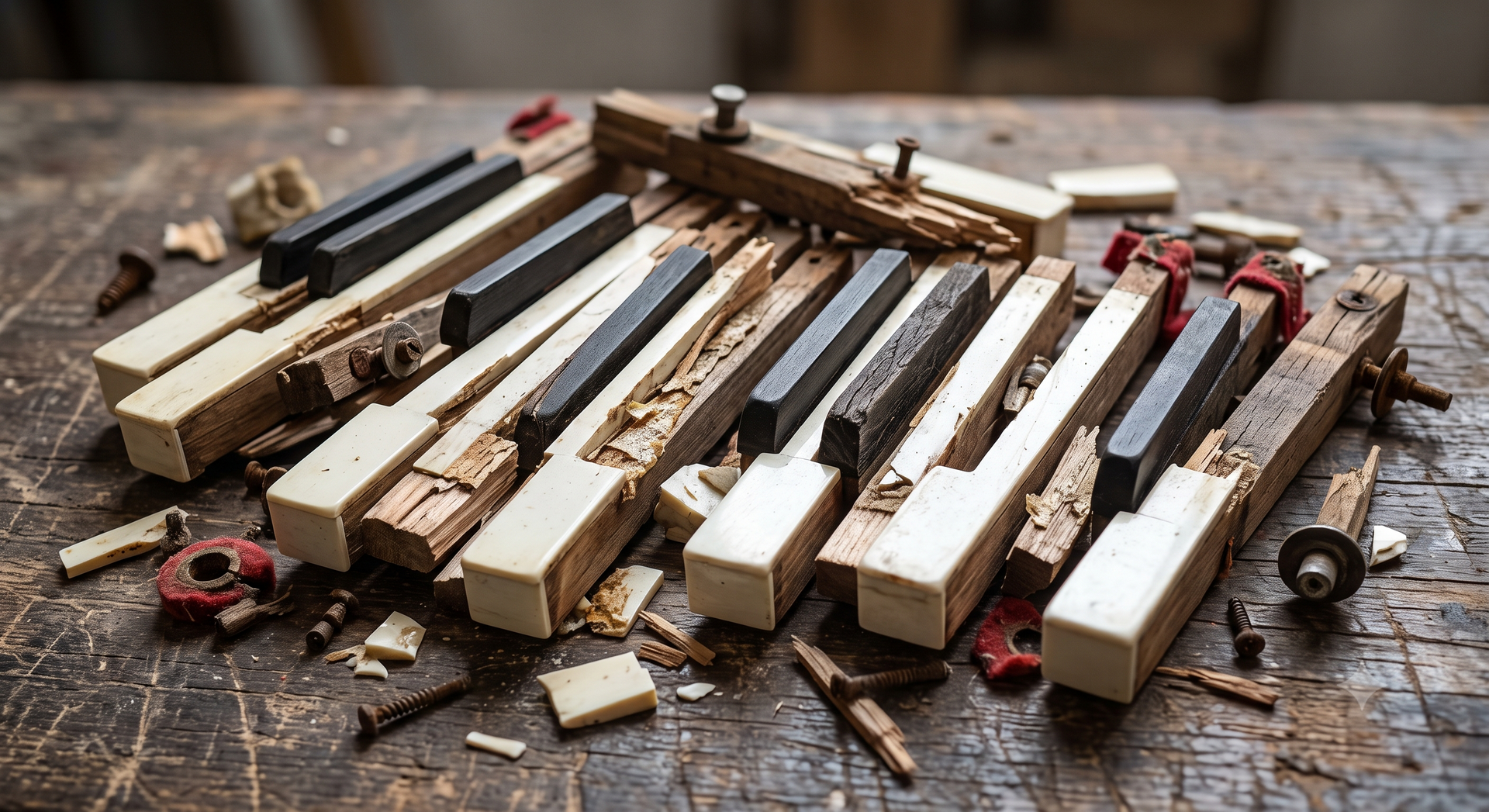
Left alone, a dead key invites more damage. Players compensate by striking harder, which stresses neighboring parts. What began as one loose flange can turn into several worn parts across an octave. A technician can pull the action, identify the failed component, and replace it – but only if the piano hasn't been played hard around the damage for months.
If your piano has a single note that stopped working after a move or a season change, that's the moment to have it looked at. One part is a small job. A whole section is not.
2. No Sound From an Entire Section
When a group of adjacent notes goes quiet or weak, the problem is usually bigger than a single broken part. On grands, a shifted or warped action, a cracked hammer rail, or damage from a fall or move can silence a range of keys at once. On uprights, a disconnected sticker or damper assembly does the same thing.
This is where waiting gets expensive. A section of dead notes often means a structural part has moved out of position, and the longer the piano stays in that state, the more the surrounding parts adapt around the misalignment. What a technician could have shimmed or re-seated becomes a rebuild of multiple assemblies.
Moore Piano handles this kind of internal diagnosis regularly through its piano repair service, tracing the silence back to the specific part that moved rather than guessing at the whole action. That distinction is the difference between a targeted fix and an open wallet.
3. A Buzz, Rattle, or Audio Dropout
A buzz that shows up on certain notes is one of the most misdiagnosed piano problems. Owners assume it's the string. Often it's not. A buzz can come from a loose screw in the case, a cracked soundboard rib, a worn agraffe, or a foreign object that fell inside – a pencil, a coin, a child's toy.
The reason a buzz matters is that some of its causes are structural. A soundboard crack, for instance, starts as a faint rattle on one or two notes and spreads as the wood continues to move with humidity changes. In this region, where winter heating dries the air and summer brings it back, soundboards expand and contract every year. A small crack caught early can sometimes be stabilized. A large one that has been growing for several seasons is a major repair.
4. Stuck or Unresponsive Keys
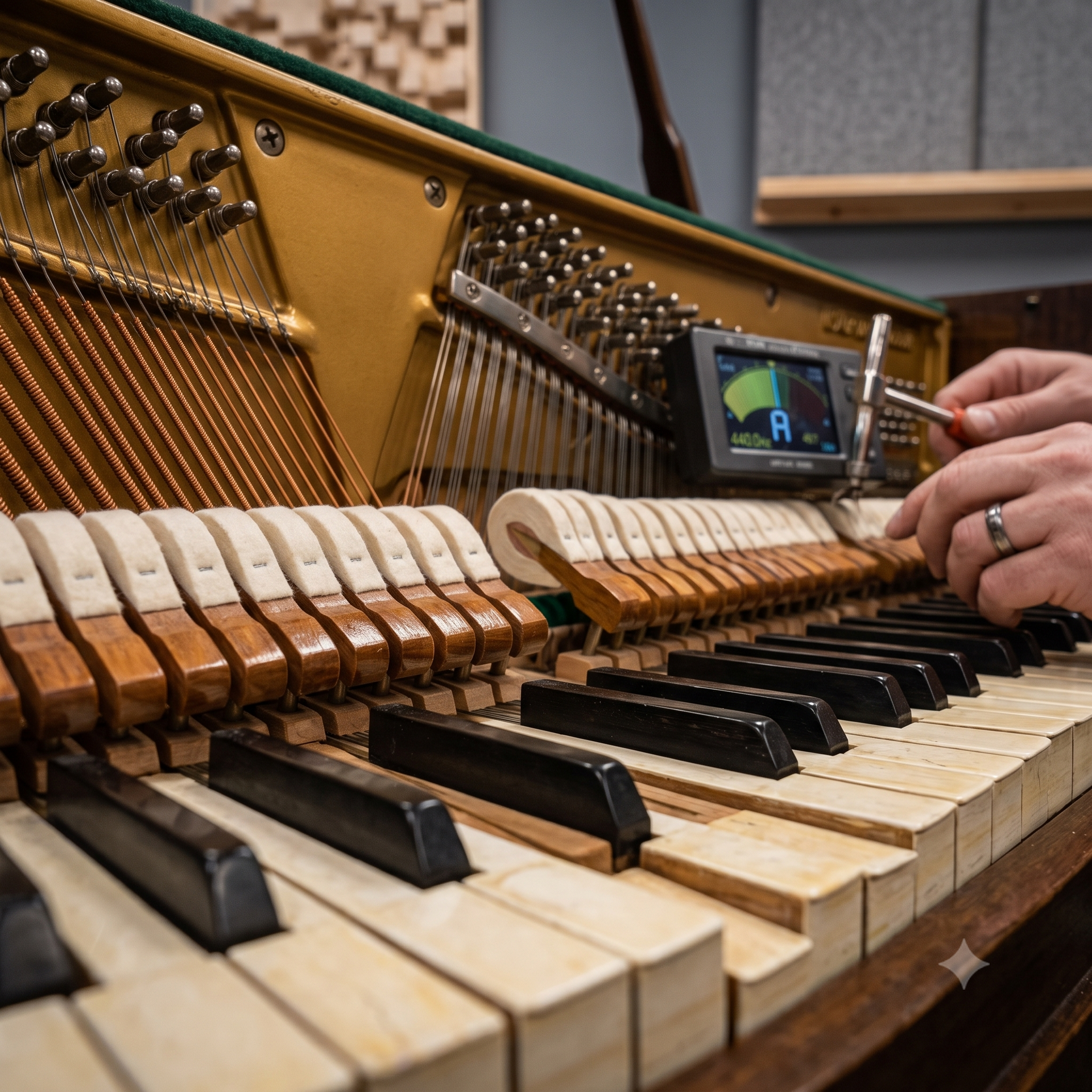
A key that sticks down, plays sluggishly, or feels heavier than its neighbors is usually a humidity story. Piano keys ride on felt-lined pins, and wood parts sit in tight tolerances. When the air gets damp, the wood swells and the key binds. When it dries out, parts can shrink and rattle. Across Northeast Indiana and Northwest Ohio, that swing happens twice a year, every year.
The early fix is minor. A technician can ease the key bushings, adjust the pins, or address the swelling before it damages the felt. Ignored, a sticking key gets forced by the player, which crushes the bushing felt and wears the pin. Now the fix is replacement parts and refitting instead of a simple adjustment.
Stuck keys also point to a broader maintenance gap. Pianos that sit in rooms with wide humidity swings and go years between service accumulate these problems across the keyboard. Controlling the environment matters, and so does keeping the interior clean – which is why regular piano cleaning is more than cosmetic. Dust and debris inside the action attract moisture and accelerate exactly the kind of wood movement that jams keys.
If several keys near each other feel slow at the same time of year, that's the humidity talking. It's worth addressing before the felt gives out.
5. A Piano That Hasn't Been Tuned in Years
The most expensive small problem is the one that makes no noise at all – a piano that has simply gone untuned for a long stretch. This isn't about neglect. Life gets busy and the piano still plays, so it slides down the list. But string tension doesn't hold steady while you wait.
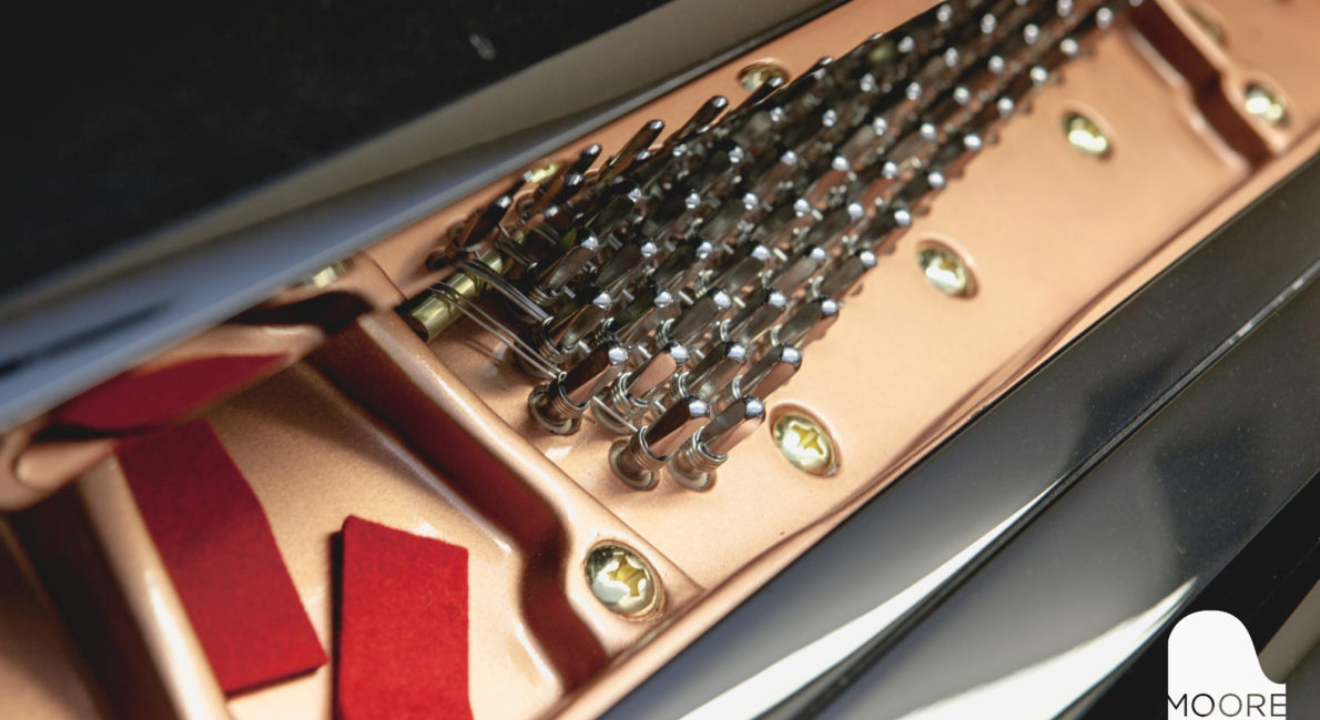
A piano at concert pitch holds roughly 18 to 20 tons of combined string tension. When it goes untuned for years, that tension drops, and it drops unevenly across the scale. Bringing it back is not one tuning – it's a pitch raise, where the technician has to pull the whole instrument up in stages so the sudden tension change doesn't snap strings or stress the pinblock. That's more labor, sometimes more than one visit, and occasionally broken strings that need replacing.
There's a structural cost too. A pinblock that holds low tension for years can loosen its grip on the tuning pins, and once pins won't hold, the piano won't stay in tune no matter how well it's tuned. That's a repair, not a tuning. A piano kept on a regular tuning schedule almost never reaches that point.
When to Call a Technician
Call when the symptom is specific and repeatable: one dead key, a buzz on the same note every time, a section that went quiet after a move, keys that stick every summer, or a piano you can't remember last having serviced. Those are the signs a technician can act on before the problem multiplies. You can also find further information about piano repair vs. piano restoration here.
You don't need to diagnose it yourself. Describing when the problem started and what changed – a move, a season, a new furnace – gives the technician enough to work with. Ron Moore diagnoses these issues on site across Northeast Indiana and Northwest Ohio, on the same instruments used by Fort Wayne Community Schools, East Allen County Schools, The Clyde Theatre, the Embassy Theatre, and Honeywell Arts & Entertainment. The problems on a school practice room upright and a theater's grand are more alike than most owners expect.
Handling It Early Costs Less Than Waiting
Every one of these five problems follows the same arc: small mechanical or structural symptom, ignored for months or years, spreading to parts that are harder to reach and more expensive to fix. The dead key becomes an octave. The buzz becomes a soundboard repair. The skipped tunings become a pitch raise and a loose pinblock. Catching them early keeps the work small.
Moore Piano is a member of the Piano Technicians Guild and the Master Piano Technicians of America – memberships that require demonstrated technical competence, not just a paid fee – and holds BBB A+ Accreditation. Ron backs the work with a Risk-Free Guarantee, and typical scheduling runs one to seven days out. If any of these five symptoms sound familiar, describe what you're hearing or feeling to book a service visit with Moore Piano and get it diagnosed before it grows.
Frequently Asked Questions
How do I know if a stuck or dead key needs a technician or if it will fix itself?
A single dead key or one that sticks does not resolve on its own, because the cause is a physical part inside the piano – a broken hammer shank, a slipped flange, a worn spring, or key bushings that have swelled with humidity. The safest move is to stop playing hard around the problem note and describe when it started, since a symptom that appears after a move or a season change points a technician toward the specific cause. Caught early, most of these are a targeted repair to one or two parts. Left alone, players compensate by striking harder, which spreads wear to neighboring parts and turns a small job into a larger one.
My piano hasn't been tuned in several years. Will one tuning bring it back?
Often it takes more than one. A piano at concert pitch holds roughly 18 to 20 tons of combined string tension, and after years without service that tension drops unevenly across the scale. Bringing it back usually requires a pitch raise, where the piano is pulled up in stages so the sudden tension change doesn't snap strings or stress the pinblock. That means more labor and sometimes more than one visit. There's no judgment in it – life gets busy and the piano still plays. The reason to handle it sooner is structural: a pinblock that holds low tension for years can lose its grip on the tuning pins, and once pins won't hold, the piano won't stay in tune. That crosses from a tuning into a repair.
How soon can Moore Piano come out, and what area do you cover?
Typical scheduling runs one to seven days out. Moore Piano is headquartered in Fort Wayne and serves Northeast Indiana and Northwest Ohio, working on everything from home uprights to concert grands. The same technician who maintains instruments for the Fort Wayne Philharmonic, Fort Wayne Community Schools, East Allen County Schools, The Clyde Theatre, the Embassy Theatre, and Honeywell Arts & Entertainment handles residential visits. When you reach out, describe what you're hearing or feeling and when it started – that helps the visit go faster.
What does the Risk-Free Guarantee cover?
Moore Piano backs its work with a Risk-Free Guarantee, and the specific terms are confirmed directly with you when you book so there's no ambiguity about what's included for your particular service. The company is a member of the Piano Technicians Guild and the Master Piano Technicians of America – memberships that require demonstrated technical competence rather than just a fee – and holds BBB A+ Accreditation. If you have a question about how the guarantee applies to a repair, tuning, or restoration you're considering, ask before the visit and you'll get a straight answer.
The Unmatched Piano Blog